My Chronic Illness Journey Part 5

I want to apologize for leaving on a cliffhanger for the past few months! My health has stabilized enough that I am able to hold a part time job. I am now the school nurse at Kitty Bungalow Charm School for Wayward Cats. Learning a new job has been a challenge, and I focused most of my mental and physical stamina learning these past few months. So thank you for being patient with me!

By February of 2015 I was still not tolerating solid food, I had lost 10 lbs, and I was taking Reglan, Phenergan, and Zofran around the clock to control my nausea. My pain had significantly improved since surgery, but I had debilitating nausea and vomiting daily. I would feel full after eating very little, and sometimes hours later I would vomit what despite the nausea medication. I also required frequent hospitalization for intractable nausea and vomiting. During this time I also experienced what I believe was a chemical pregnancy, which is a very early miscarriage when the embryo is lost shortly after implantation. I missed a period, and a home pregnancy test was positive. However a week later a blood test was negative for pregnancy. My gastroenterologist agreed that my Gastroparesis required the care of a motility specialist.

SmartPill Photo
Selfie with the SmartPill data recorder I had to wear for 5 days

The motility specialist wanted to confirm that Gastroparesis was the true root of my nausea and vomiting, and ordered a SmartPill Motility Test. The SmartPill test has a similar sensitivity to the Gastric Emptying Scan that is the gold standard for diagnosing Gastroparesis, but it doesn’t require sitting in the hospital for 4 hours waiting on the scan and it also measures motility through the entire GI tract. I had a Gastric Emptying Scan in 2008 that diagnosed Gastroparesis. The SmartPill is an electronic capsule that is taken orally after ingesting a standardized meal. It tracks pH, transit time, and temperature through the GI tract and transmits the information by low-wave radio frequency to a data recorder worn by the patient for up to 5 days. The SmartPill test confirmed delayed gastric emptying or Gastroparesis. It also demonstrated that the pill was abnormally re-fluxing between my intestine and stomach.

My motility specialist recommended I try a Botox injection into the pyloric sphincter, the muscle that controls the transit of food from the stomach to the small intestine. Botox is a toxin formed by a bacteria knows as Clostridium botulinum, that causes paralysis of muscles; This toxin is the same kind of Botox used in cosmetic procedures to reduce the appearance of wrinkles. It is theorized that injecting the toxin and paralyzing the pylorus would allow food to move more easily from the stomach to the small intestine thus easing the symptoms of Gastroparesis. However, in large randomized controlled trials of Idiopathic Gastroparesis, this treatment was not better than a placebo. However I still felt it was worth a try, but my doctor told me to set realistic expectations. Soon after the procedure I ended up hospitalized again with intractable nausea and vomiting, suggesting the procedure failed to work.

In May of 2015 I watched as my medical class graduated and moved on to residency. I felt left behind, and it was hard to accept that my life wasn’t following the same timeline as those around me. I had one thing that kept me going; I was pregnant again! During my pregnancy all of my symptoms decreased, I had an appetite again and was gaining weight. We prepared for a move from Loma Linda back to Los Angeles so that Stephen could focus on his PhD without the long commute, and I extended my leave of absence from medical school. During our apartment hunting we found a lovely 2 bedroom that seemed perfect for starting our family. Unfortunately I experienced my 3rd miscarriage on June 12, 2015. I had a D&C 3 days before we moved, and I was on lifting restrictions. Friends and strangers helped Stephen load and unload the moving van, while I recovered.

My first foster kitten Harry

I was struggling with depression and my nausea and vomiting had returned. I struggled to get out of bed every day. The 2 bedroom apartment just felt empty, and so did my life. To fill the empty apartment we started renting out our second bedroom to medical students and residents doing rotations in Los Angeles. Sharing my home with strangers seemed scary at first, but I enjoyed having the company of other medical students and being a part of their medical school journey.

I also rescued a feral kitten from the parking lot behind my apartment complex. I already had two cats, which at that time seemed like too many, so I fostered him and my brother and sister-in-law adopted him. They named him Harry after their love for Harry Potter. That started my career as a chronically ill cat lady.

[4 years later, I now have 4 cats, all street rescues, and I foster feral kittens regularly, and I work at a feral cat rescue!]

My health continued to decline into 2016, and my doctors were running out of options.

My Chronic Illness Journey Part 4

After being diagnosed with Endometriosis and having a laparoscopic excision surgery in November of 2013, I originally planned to begin my 3rd year of medical school in January of 2014 after the winter break. Excision surgery is the most effective method to treat Endometriosis because it eradicates the disease at its source by removing the misplaced endometrial implants. Unfortunately, I still had significant pain and nausea after my surgery. There is some anecdotal evidence that pregnancy helps relieve the symptoms of Endometriosis because it suppresses the hormones that lead to menstruation and cause the endometrial implants to grow and cause pain. I spoke with some of my friends whom also received a diagnosis of Endometriosis and they all had felt better during and after pregnancy. While it may not be a permanent cure, Stephen and I both want children so we started trying to conceive. We knew having a child in medical school would makes things difficult, but believed if I could just overcome this illness we could make it work.

At this point I had already been off birth control for several years and we had not yet conceived. So I started tracking my cycles and everything that goes with that so we would have intercourse on the days I was most likely to conceive. We were traveling in February of 2014 for my sister’s wedding on my most fertile days. There was a horrible ice storm and everyone in the family was scrambling to reschedule flights to make it for the wedding. Thankfully Stephen’s and my flight was the only flight not canceled, but the roads were too icy to get to where we were staying. We had a very hard time booking a hotel room as they were all booked up with so many flights canceled. I really thought we wouldn’t conceive because I was so stressed and there wouldn’t be time, but we did. We found out 2 weeks later that we were going to have a baby. That joy did not last long, as I started to bleed at 6 weeks pregnant. They could not find a heartbeat or gestational sac on ultrasound and it was suspected that I could have an ectopic pregnancy or that things were earlier than what was expected from my last menstrual period. I had to go get my blood drawn every 48 hours to check my HCG levels. HCG is the pregnancy hormone. My HCG levels were low, so I was told to expect a miscarriage. Then they doubled, and I was told that things might be ok. Then they dropped again, rose again, and dropped again. They finally wanted to use Cytotec to induce a miscarriage, but I wanted to wait, I was still holding on to hope.. So we waited another 2 days, and I continued to bleed. My final blood test 2 weeks after I started bleeding showed I was no longer pregnant. We had our first miscarriage March of 2014.

I struggled with feelings of failure after my miscarriage. It felt like I had delayed medical school for nothing, and now I was behind with nothing to show for it. We decided to stop trying to conceive, and instead try a drug called Lupron for 6 months. Lupron is an injectable drug that puts the body into a temporary state of menopause. It essentially blocks the signals from the pituitary gland in the brain to the ovaries, so that the ovaries do not produce estrogen. This estrogen is the hormone responsible for the growth of endometrial tissue that is shed during menstruation, and also the growth of the endometrial implants that causes pain. The drug can be dosed monthly or every 3 months. At first we used the 1 month dosing, the first month was difficult and I had increased Endometriosis symptoms the entire month. The second month things went a lot better so we switched to the 3 month dosing at my 3rd injection in May.

I started back to my 3rd year of medical school in June of 2014 on the Pediatrics ward at Riverside County Hospital. I completed 1 week of my rotation when my pain came back and I had a horrible flare up of symptoms. The doctors best guess was that the 3 month dosing just wasn’t able to suppress my estrogen levels as well as the 1 month dosing. So I had to leave my pediatrics rotation and wait to switch back to the 1 month dosing. During this time I struggled immensely with my inability to continue medical school, and my disease. I was having daily pain and nausea that kept me from accomplishing my goals. To make things worse I was still grieving my miscarriage, and it was difficult that I could not try to conceive again during the time off. I sought out groups on social media with similar diagnoses like Endometriosis, Infertility, and miscarriage. I was just trying to cling to the final shred of hope that things would get better for me, and I needed support from people who were struggling like me. When we switched back to the 1 month dosing of Lupron in September, things did not improve and I was desperate for help.

Surgery at the CEC

During my time off I had learned about the Center For Endometriosis Care (CEC) in Atlanta, Georgia. When my symptoms failed to improve, I decided to travel to Atlanta to be evaluated by Dr. Sinervo at the CEC. During my examination he also felt I met criteria for Adenomyosis. Adenomyosis is similar to Endometriosis, it is where the endometrial implants grow in the muscular wall of the Uterus causing pain. A diagnosis can only be confirmed by examination of the uterus after hysterectomy or removal. However there are certain signs and symptoms that may suggest this diagnosis. I was scheduled for another laparoscopic excision surgery for Endometriosis and a Presacral Neurectomy for treatment of Adenomyosis. A Presacral Neurectomy is where they cut the nerve fibers that carry pain signals from the uterus to the brain. During this surgery Dr. Sinervo identified many more endometrial implants that needed to be excised and several adhesions on my bowel.

Within a month my pain was relieved, but unfortunately I was in and out of the hospital due to uncontrollable nausea and vomiting. The gastroenterologist suspected that my gastroparesis had worsened, and it was no longer responding to my usual medication, Reglan or metoclopramide. I was given Zofran or odansetron oral dissolving tablets and Phenergan or promethazine suppositories for nausea. I had to be on a pureed and liquid diet because I stopped tolerating solid food. This continued through the New Year.

My Chronic Illness Journey Part 3

I graduated from Georgia Institute of Technology with Highest Honor with a B.S in Biology in May of 2010, I had been healthy for a year. I got married in June of 2010 and then moved across the country from Atlanta, Georgia to Los Angeles, California the day after we returned from our honeymoon. In fact, I helped pack the moving truck the day after my wedding!

In the Emergency Room after fainting during rounds

I started medical school a month later at Loma Linda University in Loma Linda, CA, 60 miles east of Los Angeles, CA where my husband attends University of Southern California as a PhD candidate in Physics and Astronomy. I woke up at 4:30 AM to commute the 1.5 hour drive the first day to my introductory rotation at Riverside County Hospital. During rounds, while discussing a patient, I experienced an episode of vasovagal syncope, also known as fainting. I hit my head on a door, and my chin hit the floor with the full force of my body. I woke up to the group of residents standing over me and I tried to tell them I was alright and could continue with work. When I spoke I realized my front tooth was out of place and I was bleeding; I had knocked my tooth out of place and bit through my lip. They put me in a neck brace and sent me to the Emergency Room for a CT scan, which thankfully came back negative. They took a full history. When I told them I have a history of fainting, they wanted to investigate further. They were also concerned as my heart rate was at 130 beats per minute, when a normal heart rate is 60 to 90 bpm, and I had a history of a high heart rate too. They admitted me to the hospital overnight and performed an echocardiogram, which is an ultrasound of the heart which came back within normal limits. They also performed a tilt table test. During a tilt table test you are strapped to a horizontal table that is moved to a vertical position while monitoring heart rate and blood pressure. My blood pressure dropped and my heart rate increased. They diagnosed me with Orthostatic Hypotension, which I would later be correctly re-diagnosed with Postural Orthostatic Tachycardia Syndrome by the Mayo Clinic eight years later.

We realized commuting every day was too much for me, so we moved again from Los Angeles, CA to Rialto, CA about 15 minutes from Loma Linda. My husband commuted four hours (round trip) by train to Los Angeles every day. However I started experiencing nausea daily. Medical school was stressful while I was just learning how to be married and living across the country from the only support system I knew. I wasn’t doing as well in medical school as I knew I could do, and Stephen was struggling too with his lengthy commute. I decided to defer for a year, and we moved back to Los Angeles, CA so my husband could focus on his studies. I spent the remainder of the year focusing on supporting my husband and on our marriage, and building a new support system of friends we had met in school.

I returned to Loma Linda University in August of 2011, ready to start fresh. Instead of either of us commuting we decided to live apart during the week. I moved in with friends in Loma Linda, and Stephen lived in our studio apartment in Los Angeles. I commuted to Los Angeles most weekends. Stephen commuted to Loma Linda on weekends before exams. This system worked really well for us both. We had set a strong foundation to our relationship that allowed us to navigate long distance better. I did really well in school my first year and second year.

During second year I started to experience pelvic pain and nausea and vomiting twice a month. At first I thought it was just stress. I feared a doctor would tell me the same thing, or they wouldn’t take me seriously like my doctor in undergraduate. So it took several months and several school absences before I sought real help. Thankfully my doctor’s took me seriously. Unfortunately I wasn’t able to tolerate any hormonal treatments with estrogen as estrogen makes my nausea worse, so I couldn’t take birth control pills. We tried progesterone based hormonal treatments including an IUD called Mirena, but nothing seemed to help. Since I had been off birth control for 2.5 years and having unprotected intercourse, I was diagnosed immediately with infertility. Infertility is diagnosed if you can’t conceive within 1 year of having unprotected sex.

As second year continued my health continued to decline. I was also studying for the most important test in medical school, the USMLE Step 1 Licensing Exam. It is the first licensing exam to becoming a physician, and your score is very important in determining what residency programs you will be accepted to. Despite being ill, I did very well on Step 1 and started my 3rd year of medical school in Los Angeles at White Memorial Hospital.

White Memorial was close to where my husband lived so I was able to just move back into our apartment. Every time I had 30 hour call days I would get sick and have to miss a day. Some days I was so ill I had to go to the emergency department for nausea medication and fluids. The treatments my doctors were recommending were not working. My Ob/Gyn suspected I had Endometriosis and scheduled me for a laparoscopic excision surgery. I had surgery in November of 2013; I was diagnosed with Endometriosis. Endometriosis is a disease where the endometrium, a tissue that lines the uterus or womb, grows outside the uterus causing pain. This pain can especially worse around ovulation and menstruation when the endometrial tissue is responding to hormones in the body. Unfortunately the surgery did not help my symptoms and I remained out of school for another year exploring other treatment options.

My Chronic Illness Journey Part 2

We never had any answers to my illness in high school, and I spent the rest of high school mostly healthy. I just seemed to eat less than others, and always felt full very quickly when eating. My mom constantly worried I was developing an eating disorder because I was so thin.

I started to get sick again during my junior year of college at Georgia Institute of Technology. At first I let my doctors pressure me into believing it was just anxiety especially because my long term boyfriend (now husband) was spending the semester away in Hong Kong. However, I starting having pain and vomiting whenever I ate, and lost around 20lbs over 2 months. I heavily relied on my boyfriends parents (now in-laws), who are both physicians, to come get me from school and administer IV fluids in clinic for dehydration. They started to question if something else was going on and advocated heavily for my health care. My father in law is a general surgeon, and he strongly suspected something was wrong with my gall bladder due to my symptoms and results of liver tests. He performed a special scan called a HIDA scan which demonstrated that my gall bladder was not emptying at all. I had my gallbladder removed, and while there were not any gallstones it was inflamed and full of bile sludge.

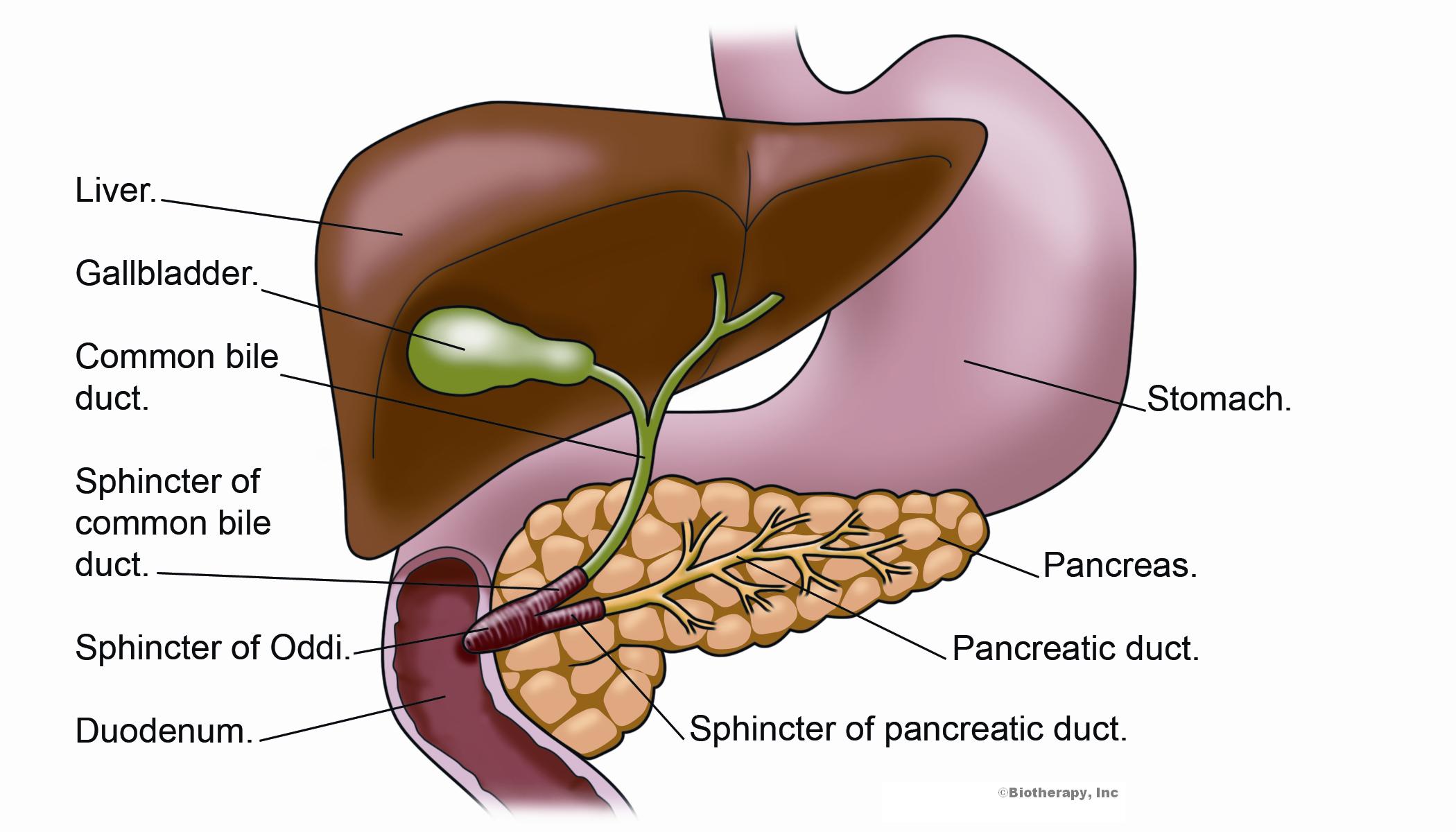
After having my gallbladder removed, I still was not recovering so we sought the care of a gastroenterologist. She scheduled test after test, checking for inflammatory bowel disease like Crohn’s and also for Celiac’s disease among other things, and they all kept coming back negative. I developed pancreatitis (inflammation of the pancreas that is very painful), so they performed an ERCP. The ERCP showed there was elevated pressure at the Sphincter of Oddi, the muscle that controls the emptying of the common bile duct and pancreatic duct into the small intestine. An elevated pressure means that bile is backing up into the common bile duct and back into the pancreas where it causes inflammation and pancreatitis. During the procedure they cut the Sphincter of Oddi to release the extra pressure and diagnosed me with Sphincter of Oddi Dysfunction. I developed pancreatitis for a 3rd time as a reaction to the procedure.

Despite this treatment, my health continued to decline. During this time I was unable to attend my classes regularly, and had to withdraw from the spring semester leaving my classes as incomplete. As a pre-med, that was very stressful for me because I was worried what it would look like on my medical school applications. I also started to lose the support of my gastroenterologist. She felt she had done everything she could, and believed I was either faking it or suffering from anorexia nervosa, an eating disorder. When I tried to find a different doctor they told me that shopping around for physicians looked bad and refused to try anything different. This made me scared to seek treatment for new symptoms or flare ups because I was afraid my doctors wouldn’t take me seriously. This doubt would frame the way I viewed my illness for the next decade.

Months went by and I was still sick and losing weight. I ended up in the hospital for vomiting bile, and they decided to do a gastric emptying test. During this test you eat a radioactive egg dish and they see how much of it is left in your stomach after certain time intervals. I remember the tech that was helping was really cute, and I was so embarassed because we had to stop the test early due to my vomiting up the meal. The test was inconclusive, but they decided to treat my case like gastroparesis, which means delayed stomach emptying. I was put on a drug called Reglan (metoclopramide) before meals. After that things seemed to improve.

I spent the rest of the semester in Colorado with my parents, resting and trying to gain back nutrition and strength. I returned to school in the summer to finish up my courses and continued to remain healthy until medical school.

My Chronic Illness Journey Part 1

Many people with chronic illness(es) recall a trigger that started it all. That trigger may be an acute viral illness like the flu, or perhaps a surgical procedure; a trigger that started their downward decline in health from which they never fully recovered. It is difficult for me to say when my decline started, but I will try to give a timeline of events that have progressed into my current health difficulties. I have head health struggles that have kept me out of school in high school, undergraduate, and medical school so I will be addressing these in 3 posts.

Image by Elionas2/Pixabay

I was in my freshman year of high school. I woke up feeling sick to my stomach, but I decided to go to school anyways. I have always loved school and studying. By midday I was unable to eat lunch and was just trying to make it to the end of the school day. By my last period, biology class, I was laying on the bathroom floor vomiting relentlessly. It was quicker to take the bus home then wait for my mom to come pick me up, so I laid on the bus seat with a grocery bag vomiting in front of all my friends. We immediately went to the pediatrician and they sent us to the Emergency Room because my white blood cell count was so high, and my symptoms were suspicious for appendicitis. By the time we reached the ER, I was feeling a little better. The ER doctor asked me to jump up and down, and I laughed because I thought it was a funny thing to do. I learned later this was his way of checking for an acute abdomen, and I should have responded in terrible pain. Since I laughed, he told me “You are to perky to have appendicitis, so we will wait and observe you.” Well after a CT scan, the most sensitive test for appendicitis, showed the typical signs of inflammation that are diagnostic of appendicitis, I was taken into surgery. My recovery seemed easy at first. I had a week off of school, where I stayed busy studying my textbooks and notes from classmates, watching movies and staying on the couch all day. I was dying to return to school the following week, but things didn’t go smoothly.

By midweek I was vomiting up bile and in pain again. We once again returned to the ER and I as admitted to the hospital. At first thinking it was just from constipation from pain medication, they treated me for that and I returned home. Yet again, the following week the same thing occurred. We were admitted to the hospital and they had to insert a nasogastric tube to drain my stomach from all the bile. I remember how awful having the NG tube was. I was in the hospital for a week while doctors scratched their heads. Nobody had any answers for us. I had missed almost 3 weeks of school, and had to make up so much work and exams. I started feeling better and things went back to normal, but I always had difficult with stomach problems since then. I stayed relatively healthy, albeit with a sensitive stomach, until my junior year of college which will be my next post.